Nuclear Chemistry

For more click here

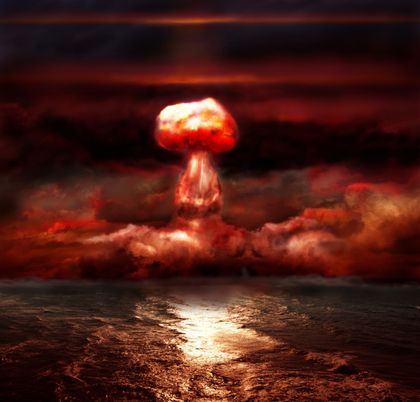
explosion of nuclear bomb over sea

Nuclear chemistry is the subfield of chemistry dealing with radioactivity, nuclear processes, and transformations in the nuclei of atoms, such as nuclear transmutation, and nuclear properties.

It is the chemistry of radioactive elements such as the actinidesradium and radon together with the chemistry associated with equipment (such as nuclear reactors) which are designed to perform nuclear processes. This includes the corrosion of surfaces and the behavior under conditions of both normal and abnormal operation (such as during an accident). An important area is the behavior of objects and materials after being placed into a nuclear waste storage or disposal site.

It includes the study of the chemical effects resulting from the absorption of radiation within living animals, plants, and other materials. The radiation chemistry controls much of radiation biology as radiation has an effect on living things at the molecular scale, to explain it another way the radiation alters the biochemicals within an organism, the alteration of the biomolecules then changes the chemistry which occurs within the organism, this change in chemistry then can lead to a biological outcome. As a result, nuclear chemistry greatly assists the understanding of medical treatments (such as cancer radiotherapy) and has enabled these treatments to improve.

It includes the study of the production and use of radioactive sources for a range of processes. These include radiotherapy in medical applications; the use of radioactive tracers within industry, science and the environment; and the use of radiation to modify materials such as polymers.[1]

It also includes the study and use of nuclear processes in non-radioactive areas of human activity. For instance, nuclear magnetic resonance (NMR) spectroscopy is commonly used in synthetic organic chemistry and physical chemistry and for structural analysis in macromolecular chemistry.

Nuclear chemistry concerned with the study of nucleus,changes occurring in the nucleus, properties of the particles present in the nucleus and the emission or absorption of radiation from the nucleus

What is an Alcohol?

Sitting in a bar drinking a beer, have you ever wondered, ”What is in this drink that makes me feel so relaxed?” You probably already know the answer is alcohol, specifically ethanol, but have you ever wondered what exactly alcohol is? Alcohol molecules are organic molecules that contain an -OH group. This -OH group makes the molecule reactive, so it is called a functional group.

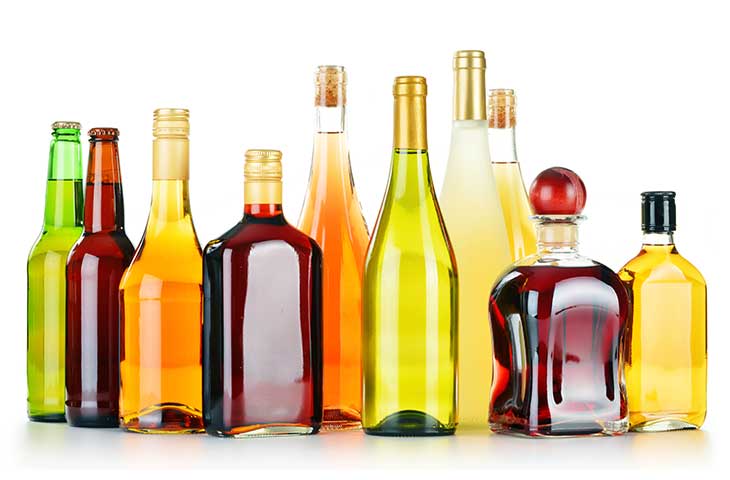
Alcohol functional groups are found in biological molecules such as sugars, amino acids, and vitamins. Alcohol functional groups are also found in molecules that are used every day. You can find ethanol in drinks like wine, beer, vodka, whiskey, gin, and rum, among many others. Ever had to check the antifreeze levels in your car? It contains ethylene glycol, another alcohol.

Nomenclature

The alcohol functional group hydroxyl is an -OH group. When naming alcohols, the -e is removed from the hydrocarbon name and an -ol suffix is added. A number in front of the hydrocarbon name tells the location of the alcohol group.

For example, in 1-butanol, there are four carbon atoms, so the parent hydrocarbon name is butane. The -e is dropped from butane and -ol is added, resulting in butanol. The 1 indicates the alcohol group is on the first carbon.

Alcohol Molecule Classification

Molecules can be classified based on the number of alcohol groups.

  • monohydric -one alcohol group on the molecule
  • dihydric – two alcohol groups on the molecule
  • polyhydric – more than 2 alcohol groups on the molecule

Solubility

The number of alcohol groups that a molecule has will affect its solubility. As the number of alcohol groups increase on the molecule with the same number of carbons, the solubility in water increases. For example, 1,4-butandiol is more soluble in water than 1-butanol.

Another way to think about this is that as the number of carbon atoms increase in an alcohol, the solubility in water decreases. So, 1-octanol with eight carbons per alcohol group is less soluble in water than 1-butanol with four carbons per alcohol group.

What is Chemistry?

  • To recognize the breadth, depth, and scope of chemistry.
  • Define chemistry in relation to other sciences.
  • Identify the main disciplines of chemistry.

Chemistry is the study of matter—what it consists of, what its properties are, and how it changes. Being able to describe the ingredients in a cake and how they change when the cake is baked is called chemistry. Matter is anything that has mass and takes up space—that is, anything that is physically real. Some things are easily identified as matter—this book, for example. Others are not so obvious. Because we move so easily through air, we sometimes forget that it, too, is matter.

imageedit_31_8888504728.jpg

As our understanding of the universe has changed over time, so has the practice of science. Chemistry in its modern form, based on principles that we consider valid today, was developed in the 1600s and 1700s. Before that, the study of matter was known as alchemy and was practiced mainly in China, Arabia, Egypt, and Europe.

Areas of Chemistry 

The study of modern chemistry has many branches, but can generally be broken down into five main disciplines, or areas of study:

  • Physical chemistry: Physical chemistry is the study of macroscopic properties, atomic properties, and phenomena in chemical systems. A physical chemist may study such things as the rates of chemical reactions, the energy transfers that occur in reactions, or the physical structure of materials at the molecular level.
  • Organic chemistry: Organic chemistry is the study of chemicals containing carbon with hydrogen. Carbon is one of the most abundant elements on Earth and is capable of forming a tremendously vast number of chemicals (over twenty million so far). Most of the chemicals found in all living organisms are based on carbon.
  • Inorganic chemistry: Inorganic chemistry is the study of chemicals that do not, in general, contain carbon. Inorganic chemicals are commonly found in rocks and minerals. One current important area of inorganic chemistry deals with the design and properties of materials involved in energy and information technology.
  • Analytical chemistry: Analytical chemistry is the study of the composition of matter. It focuses on separating, identifying, and quantifying chemicals in samples of matter. An analytical chemist may use complex instruments to analyze an unknown material in order to determine its various components.
  • Biochemistry: Biochemistry is the study of chemical processes that occur in living things. Research may cover basic cellular processes up to understanding disease states so better treatments can be developed.

CHEMISTS AT WORK

Summary

  • Chemistry is the study of matter and the changes it undergoes and considers both macroscopic and microscopic information.
  • Matter is anything that has mass and occupies space.
  • The five main disciplines of chemistry are physical chemistry, organic chemistry, Inorganic chemistry, analytical chemistry and biochemistry.
  • Many civilizations contributed to the growth of chemistry. A lot of early chemical research focused on practical uses. Basic chemistry theories were developed during the nineteenth century. New materials and batteries are a few of the products of modern chemistry.

Blog at WordPress.com.

Up ↑

Design a site like this with WordPress.com
Get started